
Blog
The PET Bottle Recycling Process Explained
Nov
Ever wondered about the journey of a plastic bottle back into useful stuff? The PET Bottle Recycling Process is key in making sustainability a reality. It helps cut down waste and supports a healthy planet. PET stands for polyethylene terephthalate. It’s a common plastic that’s great for recycling.
The recycling process involves several steps. These include washing, shredding, and turning the plastic into new items. It shows how working together can make a big difference for our world. And it fuels a circular economy, where nothing goes to waste. In South Africa, we’re working hard to make this system even better. Our goal is to benefit our economy and protect our planet.
Key Takeaways
- The PET Bottle Recycling Process is crucial for reducing environmental impact.
- Understanding PET and its recyclability fosters a sustainable approach.
- Effective plastic recycling involves multiple stages, each ensuring quality and effectiveness.
- Technological advancements enhance the sorting and processing of recycled materials.
- Community involvement and proper disposal practices are key to successful recycling efforts.
Understanding PET Bottles: Material and Usage
Polyethylene terephthalate, or PET, is valued highly in packaging. We see it often, especially as bottles. It’s key to know its role in eco-friendly practices.
What is PET?
PET stands out for being light, bendable, and clear. It first was used in 1976 for soda bottles. Now, its use has grown to include many areas, like food packaging and textiles. It’s marked by a special recycling symbol, showing it can be recycled.
Common Uses of PET Bottles
PET bottles are everywhere in packaging. They’re mainly used for:
- Water and soft drinks
- Food containers
- Consumer goods
- Textile fibers and clothing
Europe collects billions of these bottles yearly, showing wide PET usage. Sadly, many could be recycled but are not. This leads to waste in landfills or burning.
Benefits of Using PET
There are many advantages of PET. It’s light, cutting down on shipping costs and harmful emissions. Making PET bottles uses less energy and water, which eases their environmental impact. Also, it can be recycled for food packaging, adding to its recycling value.
Recycling PET into new bottles is an ongoing process, promoting sustainability. Recycled PET may look a bit different, but it’s safe and functional. New recycling methods and using more recycled PET show how beneficial this material is.
Why Recycling PET Bottles is Important
Recycling PET bottles is very important. In today’s world, protecting the environment is crucial. We must address the growing problem of plastic waste. Over 350 Oasis outlets across the nation have added recycling bins. This makes it easy for people to recycle. By recycling, we can significantly lower the PET waste in landfills and oceans.
Environmental Impact of PET Waste
Plastic waste harms our planet. Recycling PET bottles saves a lot of fuel, energy, and reduces greenhouse gases. The recycling process turns used bottles into reusable pellets. This cycle lessens environmental damage. Recycling helps protect local ecosystems and shows our commitment to saving the environment.
Economic Benefits of Recycling
Recycling PET has many economic benefits. In South Africa, PET recycling brought in about R1.2 billion for the economy. It creates jobs and supports economic growth. With 55% of PET bottles being recycled, there’s a high demand for this material. This demand creates more jobs, helping communities and tackling plastic pollution.
Conserving Resources Through Recycling
Recycling PET bottles saves precious non-renewable resources. The more we recycle, the less we depend on these finite resources. South Africa’s recycling rates are among the highest, even 15% higher than Europe’s. Teaching the public and promoting recycling are key. Recycling benefits our planet and saves resources for future generations.
The Journey of a PET Bottle: From Use to Recycle
It’s key to know how a PET bottle gets recycled. How we throw away PET bottles affects our environment and waste management. By choosing to recycle, we can lessen the harmful impacts on our planet.
Consumer Disposal Methods
Often, we toss PET bottles into the trash, which harms the environment. Choosing to use recycling bins instead is a healthier option. This helps with better waste management and supports the recycling effort. In South Africa, they’re making recycling easier with new schemes and curbside pickup.
Collection and Sorting Processes
Once we’re done with them, PET bottles go to special recovery places. Here, they separate PET bottles from other trash, making recycling more effective. They also sort bottles by color and type. This step is key for recycling quality materials. Clean-up efforts remove any dirt, making recycled PET better for the environment.
The Initial Steps in the Recycling Process
Recycling PET bottles starts with a few key steps. First, the collected bottles get a thorough cleaning. They are then shredded to prepare them for what comes next. This cleaning phase is crucial to get rid of residues, labels, caps, and impurities.
Cleaning and Shredding PET Bottles
The first task is to clean the bottles we’ve collected. We use various methods to ensure they are free from contaminants. Once they’re clean, we shred them. This turns the bottles into small pieces, making them easier to wash. It also helps manage the material in the following steps. By doing this, we make the recycled PET better for future use, even in items like food packaging.
Removing Contaminants
After shredding, it’s vital to remove any contaminants. Techniques like friction and rotary washing come into play here. They make sure we get rid of all dirt and residues. This step is essential for the quality of recycled PET. It ensures the material can be safely reused in various products. Our goal is to provide high-quality, environmentally friendly PET items.
| Step | Description | Importance |
|---|---|---|
| Cleaning | Removes residues, labels, and caps from PET bottles. | Ensures the quality of recycled material. |
| Shredding | Breaks down bottles into small flakes. | Prepares material for effective washing. |
| Contaminant Removal | Eliminates dirt and organic impurities. | Prevents quality degradation of recycled PET. |
Transforming PET Waste into Reusable Material
Creating a sustainable future involves turning PET waste into reusable material. We use advanced methods like extrusion to turn clean PET flakes into recycled pellets. These pellets are essential in industries like packaging and textiles.
Extrusion and Pellets Production
The extrusion process melts cleaned PET flakes into pellets. It’s efficient and uses less energy than making new plastics. Using rPET helps companies rely less on new plastics, supporting sustainability and reducing plastic waste.
Quality Control in PET Recycling
Quality assurance is key for safe and effective rPET. We test the material throughout production for safety and performance. This ensures recycled materials meet high standards, highlighting our commitment to circular practices.
| Stage in rPET Production | Description | Key Benefits |
|---|---|---|
| Cleaning | Removal of contaminants from PET waste. | Enhances quality and safety of rPET. |
| Extrusion | Melting and forming PET flakes into pellets. | Efficient production of reusable material. |
| Quality Assurance | Regular testing of rPET during production. | Ensures safety and reliability in usage. |
Adopting these advanced methods cuts down on plastic pollution and supports a sustainable future. Our efforts in rPET production change the way we view recycling and waste management.
Innovations in PET Bottle Recycling Technology
Recycling technology is getting better every day, especially for PET bottles. We’re finding smarter ways to be sustainable and efficient. New advances are constantly happening, changing the recycling world for the better.
New Methods in Recycling
There are some exciting updates in PET recycling technology. For example:
- Continental is now making tire parts from recycled plastic bottles.
- Repetco has a new way to recycle complex PET/PE food packaging.
- The XTREME Renew system lowers CO2 by 25% and saves up to 30% on electricity.
Advances in Sorting Technology
Improving how we sort recycled materials is key. Better sorting means more usable materials and less waste. We’re seeing:
- New methods in packaging that use less energy and are more precise.
- Better sealing for containers that keeps food safe and reduces waste.
- Initiatives by companies like Suntory to fill bottles with recycled PET, aiming for over 2.5 billion bottles a year.
Challenges in PET Bottle Recycling
Recycling PET bottles comes with challenges that need our focus. One main problem is contamination. It greatly affects the recycled PET quality. We must tackle the issues of PET contamination in our recycling efforts. The market’s role is also big, influencing prices and recycling resources available.
Contamination Issues
Contamination in PET recycling is a major concern. It’s found that rPET might have up to 8% metal. The goal is 99.9% metal-free recycled material. To reach this, technologies like metal detectors help a lot. These detectors work better with each use, hitting 92% purity on the first try, 96% on the second, and 98.9% on the third. But, contamination still challenges meeting commercial standards for recycled PET.
Market Fluctuations and Pricing
The market’s ups and downs affect recycling operations too. For instance, recycled PET demand varies, like in South Africa, making profits uncertain. Some places use 30-50% recycled bottles in injection molding. Yet, the supply and demand balance is key. Spain wants more r-PET, but can’t get enough, showing a worldwide imbalance. These market changes can slow down investment in new recycling tech, making our path to sustainability tougher.
| Aspect | Details |
|---|---|
| Percentage of Metal Contamination in rPET | 8% |
| Targeted Purity Rate for rPET | 99.9% Metal-Free |
| Effectiveness of Metal Detectors | First Pass: 92%, Second Pass: 96%, Third Pass: 98.9% |
| Recycled PET for Injection Molding | 30-50% |
| Number of States with Bottle Bills (US) | 10 States |
| Predicted National Plastic Bottle Program (US) | In the Near Future |
| Plastic Waste Entering Marine Ecosystems Annually | 12.7 Million Tons |
| Europe’s Recycling Volume Target by 2025 | 50% |
| Spain’s Recycling Rate Target by 2030 | 60% |
How We Can All Contribute to PET Recycling
We can all help boost PET recycling in our communities. Simple actions and spreading knowledge can make a big difference.
Proper Disposal Practices
It’s key to dispose of PET bottles correctly. We must put our used PET bottles in the right recycling bins, not just any trash can. This helps the bottles go back into recycling.
It reduces landfill waste and supports our community’s recycling work. Using the right disposal methods makes recycling easier. Learn more about this process at collection.
Supporting Local Recycling Initiatives
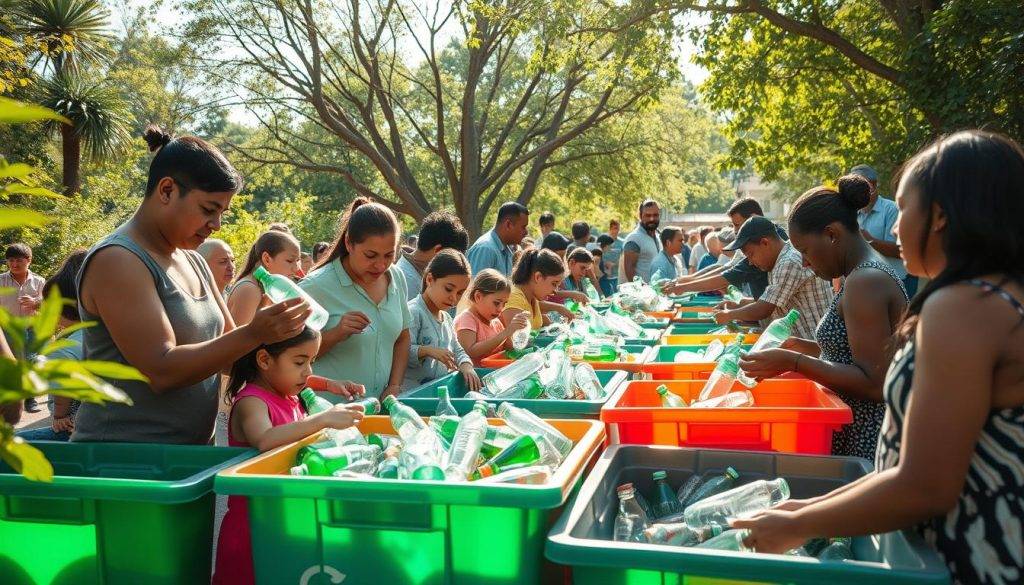
When we take part in local recycling, we strengthen our community’s eco-friendly efforts. Backing PET recycling programs builds responsible disposal habits. It also makes our community proud and united.
We can help by volunteering or asking for more recycling bins in our areas. Let’s join hands in this green mission.
Educating Others About PET Recycling
Telling people about recycling is key to more participation. Sharing what we know about recycling PET bottles can motivate others. It shows how small acts add up to big environmental wins.
We should tell our friends, family, and colleagues about recycling’s impact. Education drives can spark interest and get more people recycling. Together, we can make a difference.

The Future of PET Bottle Recycling in South Africa
South Africa is becoming more hopeful about PET recycling, thanks to big policy changes and sustainability efforts. The PET bottle industry is expected to hit USD 54.93 million by 2024. It’ll grow by 5.54% each year until 2029.
The drive for sustainable packaging is getting stronger. It reflects the need for recycling policies that satisfy customers and help the environment.
Policy Changes and Sustainability Goals
A new PET bottle recycling plant is coming to the Western Cape by 2025. It’ll increase our recycling ability by 15,000 tonnes a year. This R300 million project is a big step forward in recycling. It shows we’re serious about improving the industry and boosting our circular economy.
By working together, government and businesses can improve recycling. We aim for better transparency and effectiveness in how we manage waste.
Community Involvement and Awareness Programs
Community involvement is key to successful recycling. Education programs teach people how to dispose of things the right way, helping our recycling efforts. PETCO is reaching its goals, proving we can make a difference when we work together.
We’re building a community that knows about and values recycling. This helps increase participation in recycling. Plus, it lays the groundwork for a greener future for South Africa.
FAQs
What is PET and why is it important for recycling?
PET stands for polyethylene terephthalate. It’s a popular plastic used in many products because it can be recycled well. Recycling PET helps cut down on pollution, saves valuable materials, and supports a sustainable economy.
How can we identify PET bottles for recycling?
Look for the recycling symbol with a “1” inside it on PET bottles. This symbol means the bottle is made of PET and can be recycled.
What happens to PET bottles after disposal?
First, PET bottles go to recycling centers where they get sorted from other materials. Next, they’re cleaned and shredded into tiny pieces. These pieces are then turned into recycled PET (rPET) pellets.
Why is washing and decontaminating PET bottles crucial in the recycling process?
Cleaning PET bottles is key to remove leftovers and impurities. This ensures the rPET is of good quality for safe reuse, especially in food and drink containers.
What are some of the economic benefits of recycling PET bottles?
Recycling PET bottles helps create jobs and boosts the economy through the recycling industry. It also lessens our need for finite resources, benefitting both the environment and the economy.
What challenges does the PET recycling industry face?
The industry struggles with issues like contamination, which lowers the quality of recycled materials. Market changes can also affect how economically viable recycling is. Overcoming these obstacles is essential to increase recycling rates.
How can we contribute to improving PET recycling in our community?
To help, ensure you’re disposing of bottles correctly, like using recycling bins. Support local recycling efforts and spread the word on recycling’s importance.
What advancements are being made in PET recycling technology?
New techniques in both mechanical and chemical recycling are being developed. Better sorting technologies are also being introduced. These improvements aim to make the recycling process more efficient and the materials cleaner.
What steps are being taken in South Africa to promote PET recycling?
South Africa is pushing for better policies and aims to meet sustainability goals. Efforts are being made to get the community involved and to build a stronger recycling system.
