
Blog
How to Choose the Right PET Bottle for Your Product
Nov
Have you thought about how packaging choice affects your product’s success? Knowing the right PET bottle to pick is key today. We must consider the market’s focus on sustainability and what customers like. This is especially true in South Africa, where choosing wisely can boost our brand and care for the planet.
We’ll look at PET bottles’ good points next. They are light to carry and tough. Most food or cosmetic bottles are made of PET or PE plastics. Understanding container material properties helps us choose well for what we’re selling.
Let’s think about the effects of our choices on PET bottle selection. It’s vital we ponder the look, safety, and green aspects of our packaging. PET bottles are key in a market driven by what consumers want and value.
Key Takeaways
- Understand the distinction between PET and PE plastics for effective use.
- Evaluate the benefits of PET bottles’ lightweight and durable nature.
- Consider eco-friendly features that resonate with today’s consumer values.
- Recognize how packaging choices influence brand perception and sales.
- Stay informed about regulations surrounding food safety and product packaging.
Understanding PET Bottles and Their Uses
PET, a lightweight recyclable material, plays a big role in many industries. It’s designed to meet consumer needs, showing its importance in our lives.
What is PET?
Introduced for beverage containers in 1976, Polyethylene Terephthalate (PET) features transparency, lightness, and flexibility. Unlike other materials, PET’s standout. Though it takes a long time to break down in nature, PET can be recycled over and over. This makes it a top pick for eco-friendly businesses.
Common Applications of PET Bottles
PET is used in various fields because of its flexibility. Here’s where we often find PET:
- Beverage industry: Soft drinks, water, and juices
- Food industry: Packaging for sauces, dressings, and snacks
- Pharmaceutical industry: Bottles for medications
- Cosmetics and personal care: Containers for lotions, shampoos, and perfumes
Benefits of Using PET Bottles
PET bottles offer more than just ease of use. They are better for our planet, using less energy, water, and materials in their making. Their carbon footprint is smaller, which means less CO2 emissions, less gasoline needed, and fewer tires used during transport. Making PET bottles also creates jobs in recycling, which helps our economy.
| Aspect | PET Bottles | Glass Bottles |
|---|---|---|
| Weight | Lightweight | Heavy |
| Transparency | High transparency | High transparency |
| Recyclability | Highly recyclable | Recyclable |
| Energy Consumption | Lower | Higher |
| Decomposition Time | Hundreds of years | Hundreds of years |
Factors to Consider When Choosing a PET Bottle
Choosing the right PET bottle is important. It affects product quality and how consumers see it. Consider the type of product, size needs, and the look that fits your brand.
Product Type and Characteristics
The product type is key in selecting a bottle. For example, carbonated drinks need bottles that hold pressure well. Selecting the correct bottle material and design is critical to keep your product safe. PET bottles are flexible and work well for drinks, food, personal care, and medicine.
Size and Capacity Requirements
Matching the bottle size with how much product it will hold is critical. For home use, big bottles work best. For on-the-go or single uses, small bottles are better. This approach satisfies customers and reduces shipping costs.
Aesthetic Considerations
How a bottle looks matters a lot to customers. Choose the packaging design, color, and shape carefully to draw attention. A clear PET bottle can make your product look great. Adding unique colors or patterns can make your brand pop. These design choices grab attention and can influence buying.
Evaluating the Quality of PET Bottles
When we think about PET bottles, understanding their quality is key. High-quality PET is vital for safety and keeping the contents safe. This part discusses the main factors that show if a PET bottle is up to the mark.
Identifying High-Quality PET Material
We must look for attributes that show good quality PET. Clear appearance is important. It shows the material has no impurities.
Also, the bottle’s strength matters. It should be sturdy yet lightweight to handle pressure well.
- Thickness: The right thickness keeps the bottle strong and safe.
- Consistency: Even material texture means the bottle is made well.
- Recyclability: PET bottles being recyclable helps our planet.
Recognizing Signs of Defective Bottles
Knowing how to spot defects in PET bottles is crucial. Look out for scratches, bubbles, or any color change. These issues can harm the look and safety of what’s inside.
- Structural Weakness: Bottles that are misshapen may break under stress.
- Flaws in Closure: If not sealed right, bottles may leak and contaminate the contents.
- Brand Transparency: Brands that are open about their process often make better bottles.
Types of PET Bottles Available
When selecting PET bottles, various factors come into play. These include the types available on the market. Understanding these types helps us match our products with the right packaging.
Standard vs. Custom Shapes
Standard PET bottles are a simple choice. They are available in different sizes and styles. They are used for common needs like beverages and shampoos. Custom shapes, however, let businesses stand out. They allow for unique packaging that catches the eye. This flexibility boosts product visibility and appeal.
Clear vs. Colored Bottles
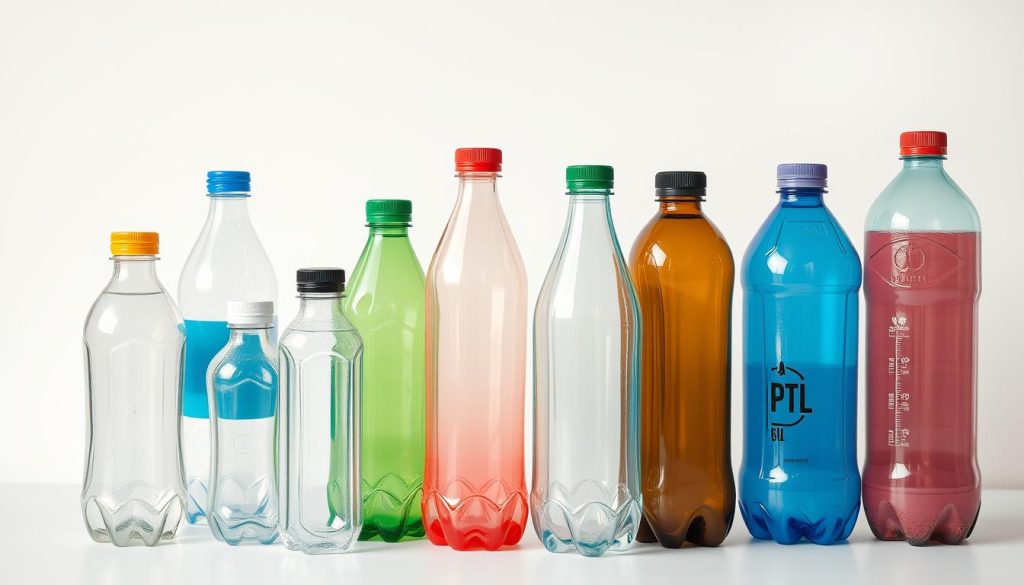
Choosing between clear and colored PET bottles is important. Clear bottles showcase the product’s quality and freshness. They work well for drinks and items where seeing the product helps sales. Colored bottles, like amber or black, protect against UV rays. They are great for products sensitive to light, marrying looks with practicality.
Sizes and Volume Options
PET bottles vary in size and volume to fit many needs. Choices range from 30ml to 500ml based on what the product and market demand. Neck sizes, including 20mm and 24mm, fit different closures. Knowing these options helps pick the best packaging for our products.

| Type | Features | Ideal Use |
|---|---|---|
| Standard PET Bottles | Readily available, various sizes | Beverages, personal care |
| Custom Shapes | Unique design, brand distinction | Brand-specific needs |
| Clear Bottles | Transparency, visual appeal | Beverages, consumables |
| Colored Bottles | UV protection, aesthetic options | Light-sensitive products |
| Volume Options | Sizes from 30ml to 500ml | Diverse packaging requirements |
Understanding Environmental Impact
Environmental concerns are key when we pick packaging materials. As we become more aware of sustainability, it’s vital to look into eco-friendly PET making and recycling. These steps help protect our planet. They also make brands looking to reduce their impact more attractive.
Sustainable Practices in PET Manufacturing
In making PET, companies are turning to greener methods. A big change is using more recycled PET, or rPET. This change lowers CO2 emissions by 82.2% compared to new PET. This means a much smaller carbon footprint. The European Union is working to use at least 25% rPET in new bottles by 2025. This shows a strong dedication to being eco-friendly.
Recycling PET Bottles
Recycling is key for sustainability. Efficient PET recycling helps us collect and reuse many used bottles. The EU plans to recycle 90% of PET bottles by 2025. Using rPET cuts greenhouse gas emissions by 79% versus new PET. Motivating people to return bottles and making bottles easier to recycle are important. These efforts help create a cycle where materials keep being reused.
As more people want sustainable products, companies can make a big impact. This helps the environment and makes these businesses stand out in a crowded market.
The Importance of Compatibility
It’s crucial to ensure product compatibility with PET bottles to keep the product safe and performing well. The way the product and the bottle material interact affects safety, shelf life, and brand reputation. These interactions matter a lot.
Product and Bottle Compatibility
The testing for compatibility usually has two steps. The first step looks at a safety data sheet (SDS). This sheet lists active chemicals, helping to match the product with the right plastic resins for the bottles. The next step tests for compatibility and stability.
Testing includes filling bottles and then warming them for a while. This mimics real-life conditions.
- Lower heat over a long time or short bursts of high heat affect test outcomes.
- Signs of a bad match might include the bottle softening or chemicals leaking.
- If there’s a problem, bottles might form a vacuum or change shape.
Skipping tests can cause big problems, like hurting a brand’s image if products get damaged during shipping or storage. Items may be turned away by stores if they don’t meet standards, affecting sales. It’s vital to do regular checks, especially if the product or packaging changes, to keep everything compatible.
Chemical Resistance of PET Bottles
How well PET bottles can resist chemicals is very important. Things like oxygen, moisture, and light can affect the packaging. Controlling light is super important in industries like wine, beer, and pharmaceuticals that use natural colors. Using UV inhibitors in the bottles can help stop the product from worsening because of light.
For example, when shipping radioactive materials, special barriers can make a product last from 24 to 48 hours. Keeping products effective is crucial, especially for thick products or those with solvents. This sometimes means choosing special materials for the bottles, like fluorinated PET.
Pricing and Budget Considerations
Choosing the right PET bottles involves understanding pricing. It’s key to compare costs from different suppliers. This helps find the perfect balance between quality and price. It’s important to not only look at cost but also at the quality.
Comparing Costs Across Suppliers
We need to consider several factors when looking at PET bottle prices. Important points include:
- Base pricing of the bottles from each supplier
- Shipping and handling fees
- Volume discounts for bulk purchases
- Customization costs for tailored designs
- Payment terms and conditions
Analyzing these factors lets us make smart choices. Our decisions need to match our budget and quality goals.
Balancing Quality with Affordability
Balancing quality and affordability can be tough. Choosing cheaper options might affect our product negatively. We should think about:
- Assessing the durability and material clarity of PET bottles
- Evaluating whether the design process aligns with our branding needs
- Understanding the implications of low-quality packaging on consumer perception
Working with reputable manufacturers like SJ MINGHUA ensures high-quality PET bottles. It also helps to stay within our budget.
| Supplier | Base Price per Unit | Shipping Fees | Customization Fee | Total Estimated Cost |
|---|---|---|---|---|
| Supplier A | $0.50 | $50.00 | $10.00 | $60.00 |
| Supplier B | $0.45 | $40.00 | $5.00 | $55.00 |
| SJ MINGHUA | $0.60 | $30.00 | $7.50 | $67.50 |
Working with Suppliers
Building a strong foundation with suppliers is key for sourcing PET bottles. A reliable supplier impacts both quality and price. It’s vital to find those who meet our standards and focus on our needs.
Finding Reliable PET Bottle Suppliers
It’s important to do your homework when searching for suppliers. Here are useful tips:
- Check Reviews and Testimonials: Look at what past customers say about their reliability.
- Assess Certifications: Choose suppliers who meet industry standards.
- Look for Industry Experience: Experience shows they know their stuff in sourcing PET bottles.
- Visit Facilities if Possible: Seeing their operations up close can tell you a lot about quality.
Establishing a Good Relationship with Suppliers
Creating strong relationships with suppliers takes time. Follow these steps to help them grow:
- Open Communication: Be clear and honest to build trust and work well together.
- Negotiate Fair Terms: Look for deals that help both sides grow together.
- Provide Feedback: Telling suppliers how they can improve benefits everyone.
- Encourage Innovation: Working on new ideas can keep you ahead in the PET bottle market.
In the end, actively working with suppliers can create strong partnerships. Reliability and clear communication ensure smooth operations.
Final Thoughts on Choosing PET Bottles
As we conclude our talk on PET bottles, let’s review the key points for making good decisions. We looked at factors like what product you’re packing, the look of the package, and how PET saves money. We also talked about how PET is good for the planet because it can be recycled. Plus, it’s safe, strong, and clear which many industries like.
Understanding PET bottles helps us pick the right one for our needs. We need to think about if it fits our product, the shape and size we want, and if it’s eco-friendly. These steps help us narrow down our choices and pick the best bottle for us.
It’s important to keep up with what’s new in PET bottles. This way, we can meet what customers want and take care of the environment. Let’s use what we’ve learned here to choose wisely and with the planet in mind.
FAQs
What is PET and why is it commonly used for packaging?
Polyethylene terephthalate (PET) is a recyclable plastic often used for packaging. It’s chosen for beverages, cosmetics, and consumables because it’s clear, strong, and safe for food. The FDA approves it for food safety.
What factors should we consider when selecting a PET bottle?
Consider the product’s nature, like if it’s sensitive to light or if it’s thick. Think about how big or small it needs to be. Color, shape, and labels matter too. They make the product stand out to customers.
How do we ensure the quality of PET bottles?
Check for high clarity and strength in the bottles. They should look and feel consistent. Watch out for marks or weakness as these issues can harm the product inside.
Can you explain the difference between standard and custom-shaped PET bottles?
Standard bottles have common shapes and sizes we see everywhere. Custom-shaped bottles, however, are designed for specific needs. They help products stand out and attract attention in the market.
What are some sustainable practices in PET manufacturing?
For sustainability, aim to cut waste during making. Use recycled materials where possible. Promote recycling the bottles after use. These steps help keep the environment in mind and draw in those who care about the planet.
How important is product compatibility with PET bottles?
It’s very important. The bottle’s material must work well with what’s inside. This affects how well the product performs and keeps. It ensures the product is safe to use and lasts a long time on the shelf.
How can we compare costs effectively across different suppliers?
Start by getting quotes from various suppliers. Then, look at their quality and compare. Aim to find a good price without giving up on the quality of the packaging. This ensures you get top value while keeping the product safe.
What should we look for in a reliable PET bottle supplier?
Look for suppliers with strong quality consistency and good communication. They should value customer satisfaction. Working closely with such suppliers helps both grow successfully over time.
What are the next steps we should take in selecting the right PET bottle?
Review what your product needs carefully. Look at options from suppliers. Stay up to date with PET packaging trends and innovations. This way, you’ll make a choice that’s best for your product.
