
Blog
The Science of PET Bottles and Temperature Control
Jun
We’re diving into how PET bottles handle temperature, focusing on insulation. Understanding PET’s properties is key to seeing how it keeps things cool or warm. This is vital for using PET bottles as insulators, mainly when dealing with heat.
Exploring PET bottles and temperature control, we’ll see why proper care is important. This is true for insulation, where how you store and handle PET bottles matters a lot. It affects how well they work.
Key Takeaways
- PET bottles can be used for insulation, providing a unique solution for temperature control.
- PET bottle insulation is affected by the thermal conductivity of materials and the rate of heat flow.
- Proper storage and handling of PET bottles are key to avoid harmful chemical leaks.
- PET and heat are closely related, with PET’s properties impacting its insulating ability.
- PET bottle insulation is a cost-effective and energy-efficient way to control temperature.
- For more information, visit our website at www.petactive.co.za or call us at +27 71 773 0527.
Understanding PET Bottle Insulation
We specialize in top-notch PET bottle insulation solutions. We know how important PET bottles are in insulation. PET, or polyethylene terephthalate, is a common plastic for packaging drinks and other items. It’s light, flexible, and strong, making it perfect for insulation materials.
PET bottle insulation keeps things cool, quiet, and dry. Studies show recycling PET bottles cuts down on landfill waste and saves resources. To learn more about PET bottle recycling, check out PET bottle recycling. It explains how recycled PET bottles can make new products.
The main perks of PET bottle insulation are:
- Great at keeping things cool
- Reduces noise
- Keeps moisture out
Our company focuses on green insulation solutions, and PET bottle insulation is a big part of that. It’s good for the environment and offers many benefits. So, if you’re looking for eco-friendly insulation, PET bottle insulation is a great choice.
How PET Bottles Insulate Temperature
PET bottles are key in controlling temperature in many uses. They work by slowing down heat transfer. This helps keep drinks cold or hot for longer.
PET’s thermal conductivity is low, between 0.15 to 0.24 W/(m·K). This makes it great for keeping drinks cold. It’s also used a lot in packaging to keep liquids at the right temperature.
The Science Behind Insulation
PET bottles insulate well because they reduce heat transfer. They use air gaps to block heat flow. This is better than some other materials because PET is cheap, light, and flexible.
Role of Air Gaps
Air gaps are vital for insulation. They block heat, keeping drinks at the right temperature. This is key in the beverage industry where temperature matters a lot.
Comparison with Other Insulation Materials
PET bottles beat other materials in cost, weight, and flexibility. They have similar thermal conductivity to polystyrene and polypropylene. Our experts can help pick the best PET bottle insulation for your needs.
Innovations in PET Bottle Technology
We are dedicated to creating innovative, eco-friendly PET bottle insulation solutions. New advancements in PET bottling include biodegradable and recycled PET. Recycled PET (rPET) cuts down greenhouse gas emissions by 71% compared to new PET. This makes it a great choice for those who care about the environment.
The future of PET insulation is promising, with a focus on green solutions. Our company aims to lead in these advancements. We want to give our customers the latest and best PET bottle insulation options. Key benefits of rPET include:
- Reduced energy consumption: Making rPET uses 79% less energy than making new PET.
- Lower carbon footprint: rPET’s carbon footprint is about one-quarter that of new PET, with 0.45kg CO2e per kg compared to 2.15kg for new PET.
- Increased recyclability: Our packaging improvements have made it about 95% recyclable, reducing waste and environmental impact.
We’re excited about the positive impact PET bottle insulation can have on the environment. Plastic production is a big contributor to landfill and ocean pollution. Our focus on eco-friendly PET bottle insulation is a step in the right direction. We’re committed to continuing to innovate and improve our products and services.
Advantages of Using PET Bottles for Insulation
Our PET bottle insulation solutions can help you save energy and cut costs. By using PET bottles, we reduce heat transfer and keep moisture out. This lowers energy use and costs. PET bottle insulation is a smart, cost-saving choice for many industries.
PET bottles offer many benefits, like energy efficiency and saving money over time. Huntsman has used the same amount of PET bottles as five billion 500ml ones. They made 290 million lbs. of TEROL® polyester polyols for insulation.
This insulation cuts down on heating and cooling costs. It leads to energy savings and helps the environment. With PET bottle insulation, you can make your building more energy-efficient and eco-friendly.
Some key benefits of PET bottle insulation are:
- Less energy use
- Lower costs
- More sustainability
- Easy to handle and transport
Choosing PET bottle insulation means you’re helping the planet. Our company offers a cost-effective solution for your insulation needs.
Challenges with PET Bottle Insulation
Exploring PET bottle insulation reveals its challenges. PET bottles are sensitive to extreme temperatures. This can cause them to break down and release harmful chemicals. This is a big issue, mainly when using PET bottles for heat insulation.
There’s also a big environmental problem with PET bottles. About 1.5 million tons of PET are collected every year worldwide. The demand for eco-friendly options is growing fast. The European Commission wants to see 90% of PET bottles recycled by 2025. This shows we need to find better ways to use PET bottles.
- Temperature sensitivity: PET bottles can degrade and leach chemicals when exposed to extreme temperatures.
- Environmental concerns: The use of PET bottles contributes to pollution and waste, stressing the need for sustainable practices.
- Compatibility issues: PET bottles may not work well with some materials, like plaster of Paris or cement mortar mixtures.
Despite these challenges, our company is dedicated to safe and eco-friendly PET bottle insulation. We aim to use PET bottle insulation in a way that reduces risks. By facing these challenges and working towards sustainability, we can enjoy the benefits of PET bottle insulation while protecting the environment.
| PET Bottle Collection | Year | Collection Rate |
|---|---|---|
| Europe | 2020 | 58.6% |
| Worldwide | 2020 | 1.5 million tons |
Recycling PET Bottles: Benefits and Process
We urge our customers to recycle their PET bottles to help reduce waste. Recycling PET bottles is key to lessening waste and environmental impact. The recycling process starts with collecting and sorting bottles. Then, they are broken down into raw materials for new products, like insulation.
Some benefits of recycling PET bottles include:
- Conservation of natural resources
- Reduction of environmental waste
- Lower energy consumption compared to producing new plastics
- Creation of new products, such as polyester fiber, fiberfill, and thermoformed packaging
Recycled PET (rPET) can be turned into various products, including insulation. This helps buildings use less energy. By recycling PET bottles, we can cut down pollution, save natural resources, and reduce landfill space.
About 25% of PET bottles are recycled in the U.S. We want to increase this number. We’re working to spread the word on PET bottle recycling and its benefits.
| Product | Application |
|---|---|
| Polyester fiber | Clothing, carpets |
| Fiberfill | Sleeping bags, pillows, duvets |
| Thermoformed packaging | Food, electronics, cosmetics |
Practical Uses of PET Bottle Insulation at Home
PET bottle insulation is great for DIY projects at home. It’s a cheap and green way to keep things cool or dry. People are using it more for things like greenhouses and cold frames. It works well and cuts down on waste.
Recycling PET bottles is getting more popular, with a 57% rise in South Africa. This shows more people care about recycling. Big companies like Coca-Cola and PepsiCo are using recycled PET in their packaging too.
DIY Projects
Popular DIY uses include greenhouses, cold frames, and self-watering planters. These projects are fun and help the planet. They also cut down on waste and support sustainability.
Home Insulation Ideas
PET bottle insulation is also good for home insulation. It can go in attics, walls, or floors. This saves energy, lowers bills, and makes homes cozier. It’s a smart way to save money and help the planet.
Using PET bottle insulation in DIY and home projects is good for the environment. It helps reduce waste and makes living spaces greener. By doing this, we can all help make a difference and support a circular economy.
PET Bottle Insulation in the Beverage Industry
The beverage industry uses a lot of PET bottle insulation. Many companies use PET bottles to package their drinks. Our solutions help keep drinks at the right temperature, preventing them from getting too hot or cold.
PET bottles are becoming more popular in the beverage sector. In 2014, about 80% of PET material was used for drinks. Most of it was for water and sweet drinks.
PET bottle insulation is key for keeping drinks safe. It stops bacteria from growing, which is important for quality and safety. It also saves energy needed to cool or heat drinks, making it better for the environment.
| PET Bottle Size | Weight | Volume |
|---|---|---|
| 20 oz | 20-30 g | 600 ml |
| 1.5 L | 40-50 g | 1500 ml |
| 2 L | 50-60 g | 2000 ml |
Using PET bottle insulation helps companies reduce their environmental impact. It also makes their products better and safer. As people want more eco-friendly packaging, PET bottle insulation will likely grow, leading to more innovation and growth.
Case Studies: Success Stories with PET Insulation
Our company has worked on many projects worldwide. We use PET bottle insulation for temperature control and to save energy. Our solutions are used in greenhouses, homes, and more. We’re proud to share our success stories and case studies.
A study on PET insulation research shows its effectiveness. PET bottle insulation is energy-efficient, cost-effective, and eco-friendly. Our case studies show big energy savings, weight cuts, and better comfort in building, automotive, and aerospace.
Some notable examples of our case studies include:
- Energy savings: Our PET foam insulation panels cut heating and cooling costs in high-rise buildings.
- Weight reduction: Our PET foam composite panels support structures while cutting weight in yacht construction.
- Passenger comfort: Our PET foam cushions enhance comfort in electric vehicle seats.
These success stories highlight our PET bottle insulation’s effectiveness. We keep innovating and improving. Our goal is to offer the best products and services to our customers.
| Industry | Application | Benefits |
|---|---|---|
| Building and Construction | Insulation | Energy efficiency, cost-effectiveness |
| Automotive | Seat cushions | Passenger comfort, weight reduction |
| Aerospace | Interior panels | Weight reduction, improved fuel efficiency |
Comparing PET Insulation to Traditional Options
There are many insulation options, each with its own pros and cons. Traditional materials like fiberglass and mineral wool are common but pricey and not great for the environment. Our PET bottle insulation is a cheaper, better option that’s also kinder to the planet.
PET bottle insulation is top-notch at keeping heat out and energy use down. For instance, Isotherm insulation can cut heat flow by up to 90% in summer and lower heating needs by 70% in winter. This beats out fiberglass and mineral wool in performance.
Here’s a look at the costs of different insulation:
- Fiberglass insulation: cheap but not as good as PET bottle insulation
- Mineral wool insulation: pricier but better at soundproofing and fire safety
- PET bottle insulation: affordable, performs well, and is eco-friendly
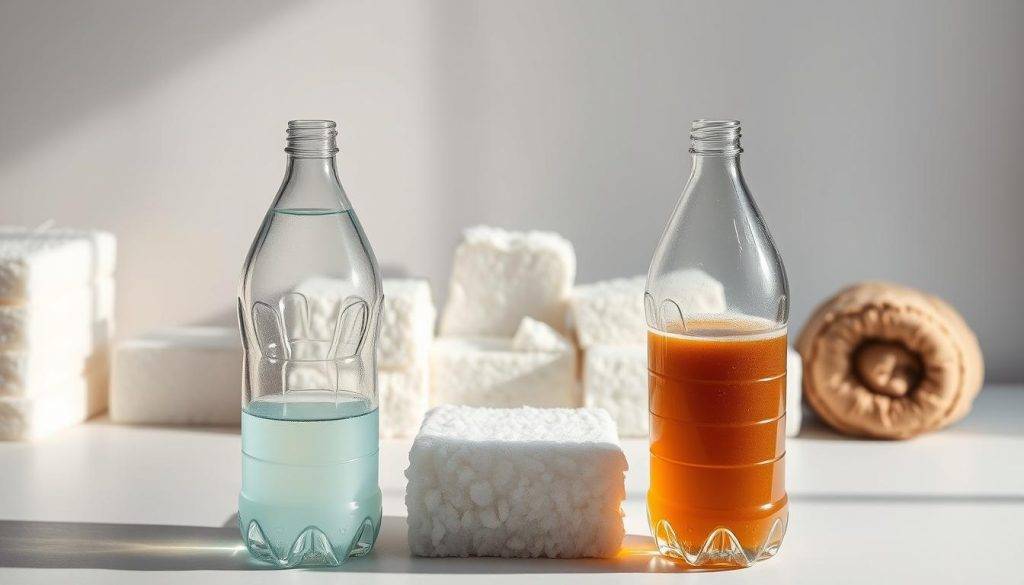
In short, PET bottle insulation is a budget-friendly, eco-conscious choice. It outshines traditional materials in performance and environmental friendliness.
| Insulation Material | Cost | Performance | Environmental Impact |
|---|---|---|---|
| Fiberglass | Relatively low | Decent thermal resistance | High environmental impact |
| Mineral Wool | Higher | Better soundproofing and fire resistance | Lower environmental impact |
| PET Bottle Insulation | Cost-effective | Highly effective in reducing heat flow and energy consumption | Lower environmental impact |
The Future of PET Bottle Insulation Technology
As the PET bottle insulation industry grows, we’ll see new ideas and tech. Our company aims to lead in these advancements. We’re focused on green solutions for our customers.
We think the future will bring more recycled materials, better making processes, and new uses for PET bottle insulation. With PET made from terephthalic acid and ethylene glycol, we’re eager to contribute. We’re excited to help make sustainable building a reality.
FAQ
What is PET and how is it used in insulation?
PET stands for polyethylene terephthalate, a common plastic for packaging. It’s used for insulation because it’s light, flexible, and strong. PET bottles keep things warm or cool, block noise, and keep moisture out.
What are the benefits of using PET bottles for insulation?
Using PET bottles for insulation saves energy and money over time. They stop heat from moving and keep moisture out. This means less energy use and lower costs. Plus, they’re easy to move and handle because they’re light and flexible.
What are the challenges with using PET bottles for insulation?
PET bottles don’t do well in very hot or cold temperatures. They can break down and release chemicals. There are also worries about pollution and waste from using PET bottles.
How can PET bottles be recycled for insulation?
Recycling PET bottles helps reduce waste and environmental harm. First, we collect and sort them. Then, we break them down into raw materials for new products, like insulation.
What are some practical uses of PET bottle insulation at home?
PET bottle insulation is great for DIY projects and home insulation. It’s often used in greenhouses or cold frames. It helps control temperature and keeps moisture out.
How does PET bottle insulation compare to traditional insulation materials?
Traditional insulation like fiberglass and foam is expensive and has environmental issues. PET bottle insulation is cheaper and better for the planet. It performs well and has a lower environmental impact.
What are the future trends in PET bottle insulation technology?
The PET bottle insulation industry is growing, with new ideas and technologies coming. We’ll see more recycled materials, better manufacturing, and new uses. These changes aim to make insulation more sustainable and eco-friendly.
